Load Balancing
Load Balancing mechanism used for WAF
Overview
Load balancing across multiple application instances is a commonly used technique for optimizing resource utilization, maximizing throughput, reducing latency, and ensuring fault-tolerant configurations.
Load Balancing Algorithms
This field specifies the load balancing algorithm according to the configured website.
-
ROUND ROBIN: This algorithm is a smart approach to distribute client requests across an array of servers. It forwards the client request to each server in turn. Also, assigns a weight to each server as per current load and idle capacity.
-
LEAST CONNECTIONS: This algorithm is a dynamic load balancing algorithm. It forwards client requests to the server, which has the least no. of active connections on the server.
-
LEAST LISTENER CONNECTIONS: This algorithm is a dynamic load balancing algorithm. It forwards client requests to the server, which have a small response time in order to serve requests.
-
LEAST RESPONSE TIME: This algorithm is a dynamic load balancing algorithm. It forwards client requests to the server, which have a small response time in order to serve requests.
-
MINIMUM JITTER: This algorithm is a dynamic load balancing algorithm. It forwards client requests to the server, which have served the minimum jitter. NOTE: For this algorithm to work, the server group should have ICMP monitor attached.
-
IP HASH: This algorithm takes the client's and server's source and destination IP address to generate a unique hash key. This key is used to assign the client to a specific server. In the case of a broken session, the key can be regenerated, and the client can be directed to the same server.
-
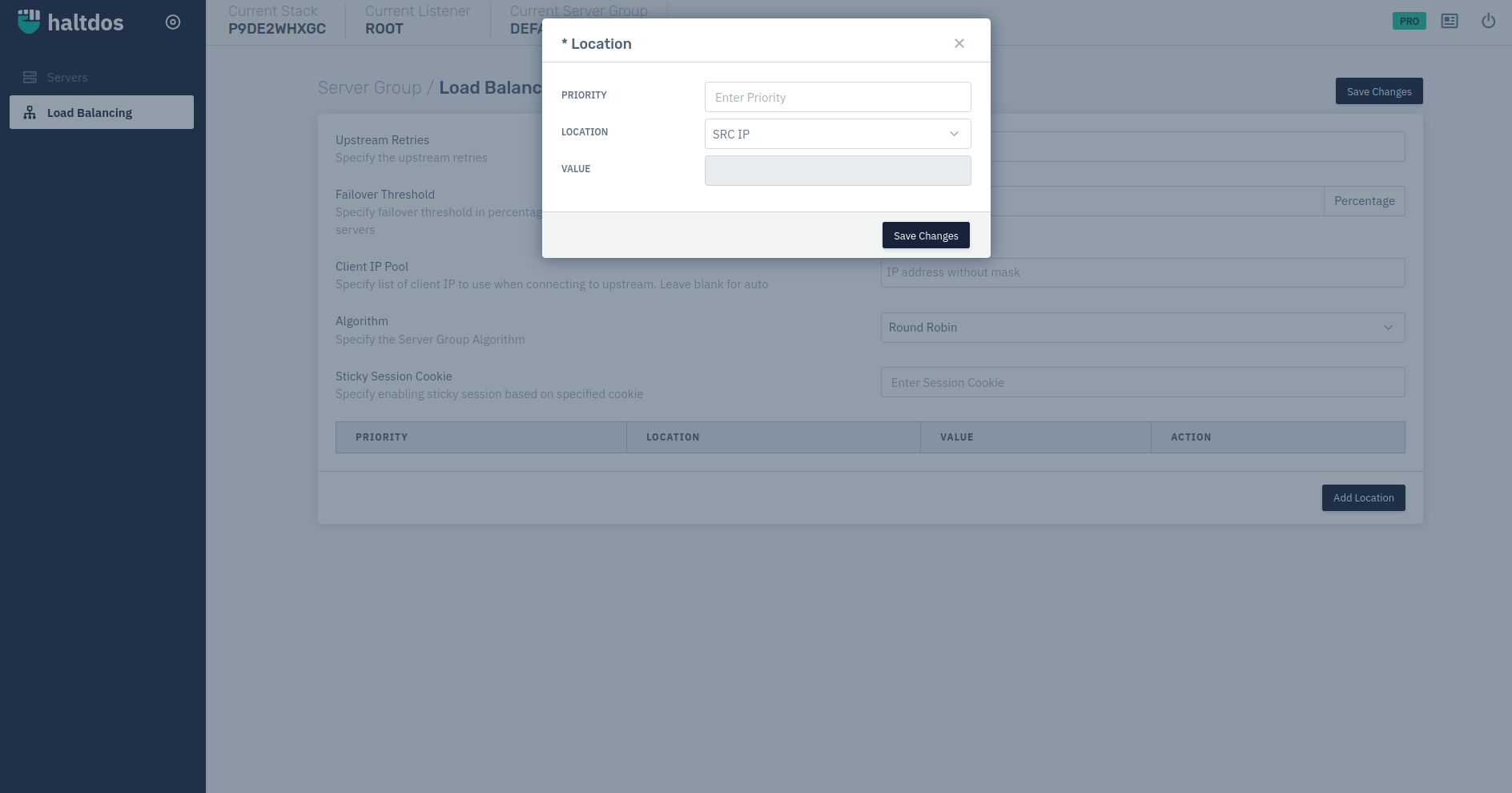
PERSISTENT HASH: This algorithm takes the user input location within the current request to generate a user-defined custom unique hash key. This key is used to assign the client to a specific server. In the case of a broken session, the key can be regenerated, and the client can be directed to the same server. NOTE: In hashing-based load balancing, if a specified value does not exists then the request is served on the basis of client's IP address.
-
Least Requests: This algorithm is a dynamic load balancing algorithm. It forwards client requests to the server, which have served the minimum amount of requests.
-
SNMP Metrics: This algorithm is a dynamic load balancing algorithm. It forwards client requests to the server, which have least CPU / RAM usage. NOTE: For this algorithm to work, the server group should have SNMP monitor attached.
How to Use:
- Log into the Haltdos WAF Professional edition web UI console.
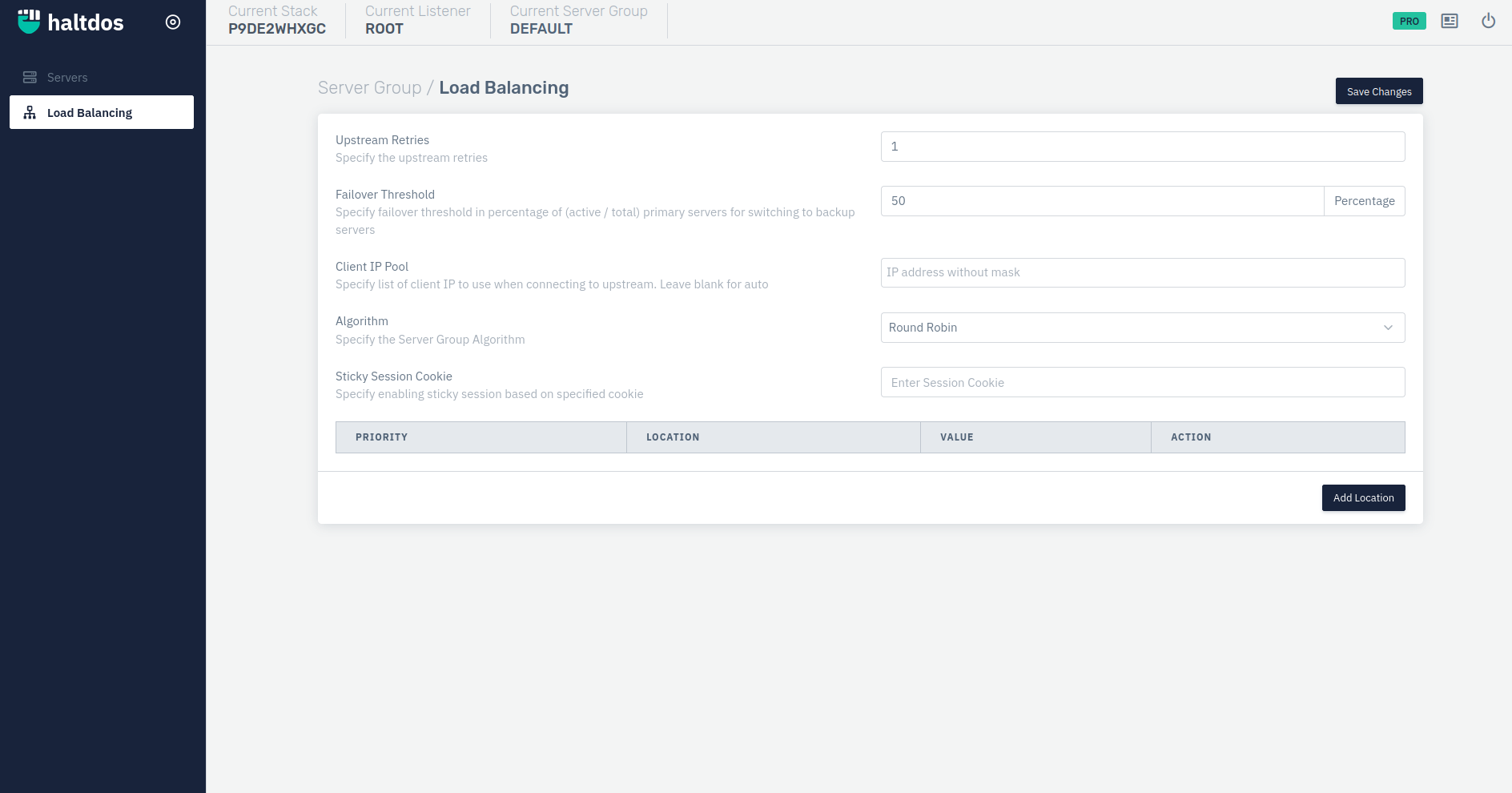
- Then go to Listeners > Server Groups > Load Balancing
- Set the configurations and Save Changes.
| Parameters | Accepted Values | Default |
|---|---|---|
| Upstream Retries This algorithm is a dynamic load balancing algorithm. It forwards client requests to the server, which has the least no. of active connections to the back-end server. | Integer | 1 |
| Fail-over Threshold | Integer | 50 |
| Client IP Pool | Integer | Blank |
| Algorithm | Algorithm Drop-down | ROUND ROBIN |
| Sticky Session Cookie | String | Blank |
| Add location | String & Integer | This toggle button allows you to enable the Web-socket support for servers in the server group.None & Src IP |
Description
Upstream Retries
This option used to specify the upstream retries. By default, the value is set to 1.
Fail-over Threshold
This option specify the fail-over threshold in percentage of (active/total) primary servers for switching to backup servers. By default, the value is set to 50%.
Client IP Pool
Specify list of client IP to use when connecting to upstream. Leave blank for auto
Algorithm
This option is used to specify the algorithm used by the server group. By default, the value is selected as Round Robin.
Sticky Session Cookie
Specify enabling sticky session based on specified cookie