Members
Overview
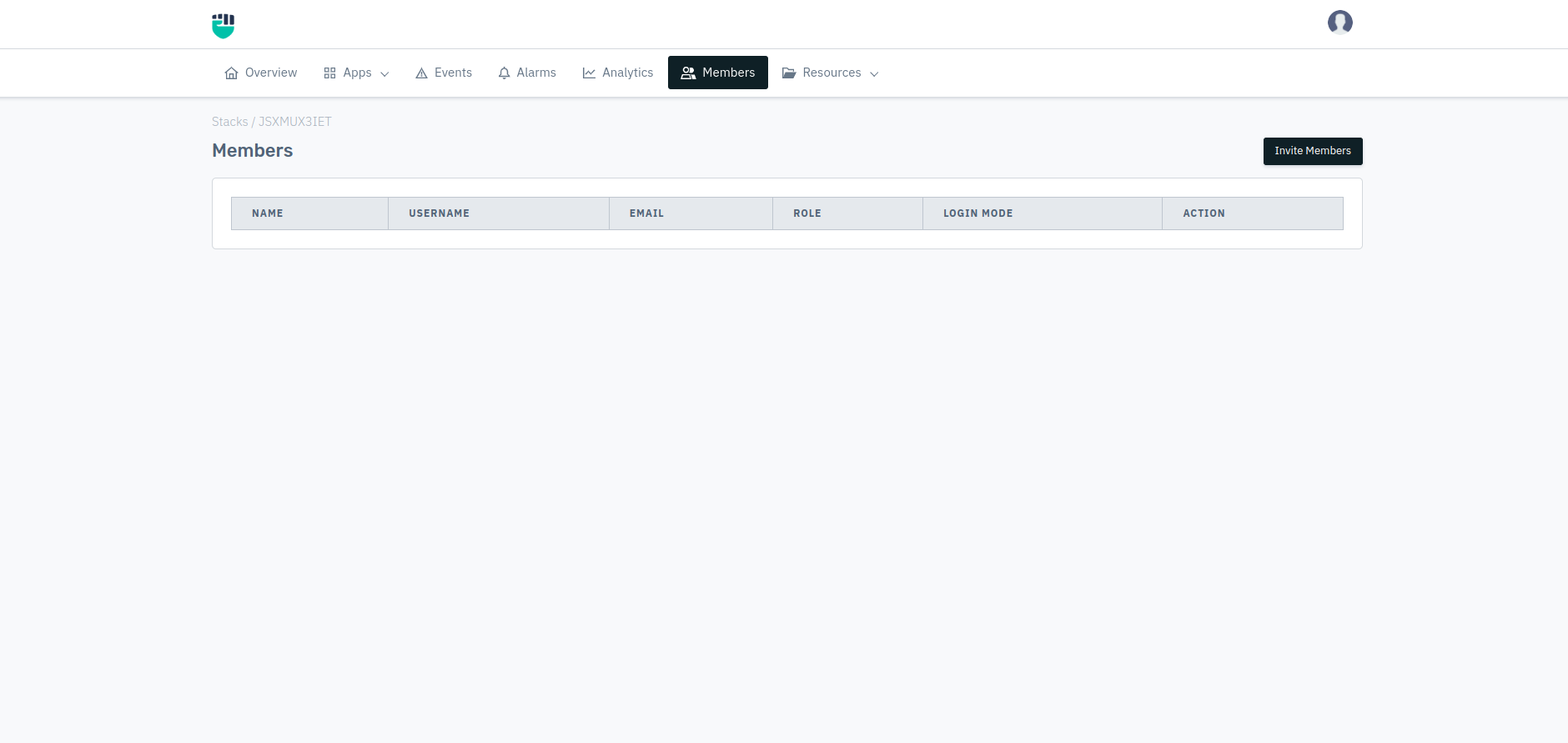
Members defines which users have access to a Stack and what level of access they have. Haltdos uses Role-Based Access Control (RBAC) — every user on a Stack is assigned a role that controls what they can view and modify.
This is separate from the System-level Administrator accounts. Members are Stack-scoped users. An Administrator created under System > Management > Administrators can access the entire appliance; a Stack Member can only access the Stacks they are invited to.
How to Use
- Go to Stack > Members
- Click Invite Members
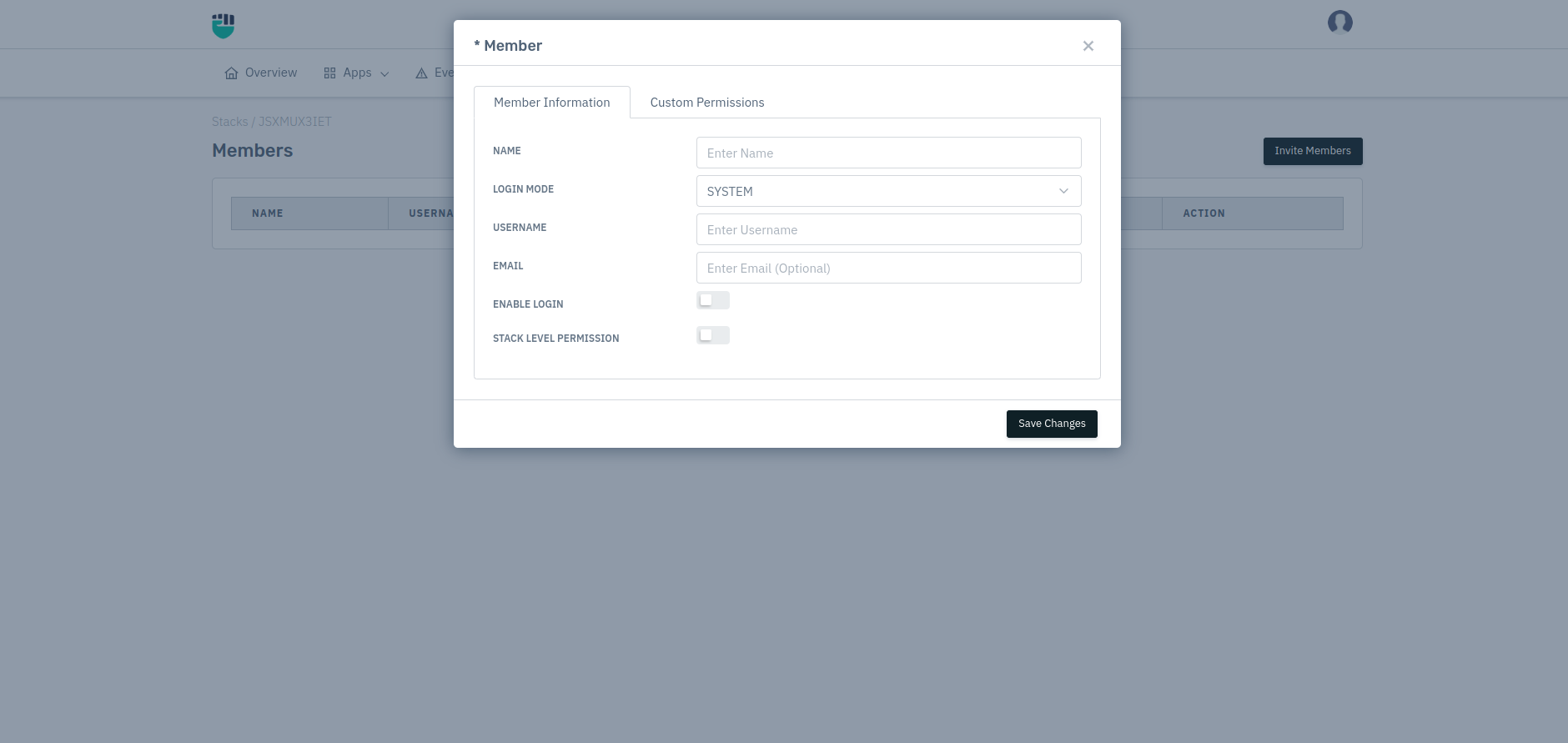
- Fill in the user's details and assign their role
- Click Save Changes
The invited user will receive login credentials and can access the Stack based on their assigned permissions.
Field Reference
Name
The display name for this member.
Accepted values : String (alphanumeric, spaces allowed)
Default         : Blank (required field)
Example: Pratyush Tester, Prashant Admin, Read-Only Auditor
Login Mode
Controls how this user authenticates when logging in. Choose based on your organization's authentication infrastructure.
Accepted values : SYSTEM / LDAP / RADIUS / TACACS
Default         : SYSTEM
| Mode | How it works | When to use |
|---|---|---|
| SYSTEM | Username + password stored locally on the Haltdos appliance | Default for standalone deployments; no external auth server needed |
| AD | User authenticated against Microsoft Active Directory | When your org manages identities through Windows Active Directory |
| LDAP | User authenticated against an LDAP/Active Directory server | When your org uses AD/LDAP for centralized identity management |
| RADIUS | User authenticated against a RADIUS server | Network-centric orgs; supports 2FA via RADIUS |
| TACACS | User authenticated via TACACS+ protocol | Common in network device management environments |
| SAML | User authenticated via SAML 2.0 Single Sign-On | When your org uses an Identity Provider (Okta, Azure AD, ADFS, etc.) for SSO |
For LDAP, RADIUS, and TACACS modes to work, the respective server must first be configured under System > Management > AD / LDAP / RADIUS / TACACS / SAML. Without that configuration, login will fail for those modes.
Username
The login identifier for this user. Must be unique within the appliance.
Accepted values : String (alphanumeric, underscores, hyphens; no spaces)
Default         : Blank (required field)
Example: pratyush.srivastava, tester_01, test.user
Email
The user's email address. Used for:
- Alarm notifications (if Enable Notification is ON for this member)
- Password reset communications
Accepted values : Valid email address (format: user@domain.com)
Default         : Blank (required field)
Enable Login
Controls whether this member can currently log in to the platform. Disabling this does not delete the member — it simply prevents authentication.
Accepted values : Enable / Disable
Default         : Disable
Use this to temporarily suspend access without deleting the user account. For example, when an employee is on leave or during an access review.
Stack Level Permission
When enabled, grants this member the same permission level across all resources within the Stack (all listeners, zones, apps).
Accepted values : Enable / Disable
Default         : Disable
When disabled, you can configure per-resource access using the Custom Permission section below, giving different access levels to different listeners or apps within the same Stack.
Custom Permission
Custom permissions let you grant a user access to specific resources within the Stack rather than everything.
Resource
The specific resource (Listener, Zone, or App) this permission applies to.
Accepted values : Any resource configured in the current Stack
Default         : ALL
Access Level
The level of access for the selected resource.
Accepted values : Admin / Read & Write / Read Only
Default         : Admin
| Access Level | What the user can do |
|---|---|
| Admin | Full control: add, edit, delete configurations; invite/remove members |
| Read & Write | Can view and modify configurations, but cannot manage members |
| Read Only | Can only view configurations and analytics; cannot make any changes |
Testing tip: Always verify a new member's access with the lowest privilege needed first, then escalate if required.
Enable Notification
Whether this member receives alarm notifications for this resource.
Accepted values : Enable / Disable
Default         : Disable
Enabling notifications here is necessary but not sufficient. SMTP must also be configured under System > Integrations > SMTP. Without SMTP, no emails are sent regardless of this setting.
Multi-Stack Access
A single user account can be granted access to multiple Stacks. In a clustered setup, if a user with the same username and email is added to a second Stack (even with different permission levels), they automatically gain access to that Stack using their existing credentials.
When a new user is added to a Stack, their initial password is determined by the Default Password field in System > Security > Password Policy. They should change this on first login.